
2026-10-18 ·
Ice Dams and Winter Roof Leaks: How to Reduce Risk in Eau Claire, WI
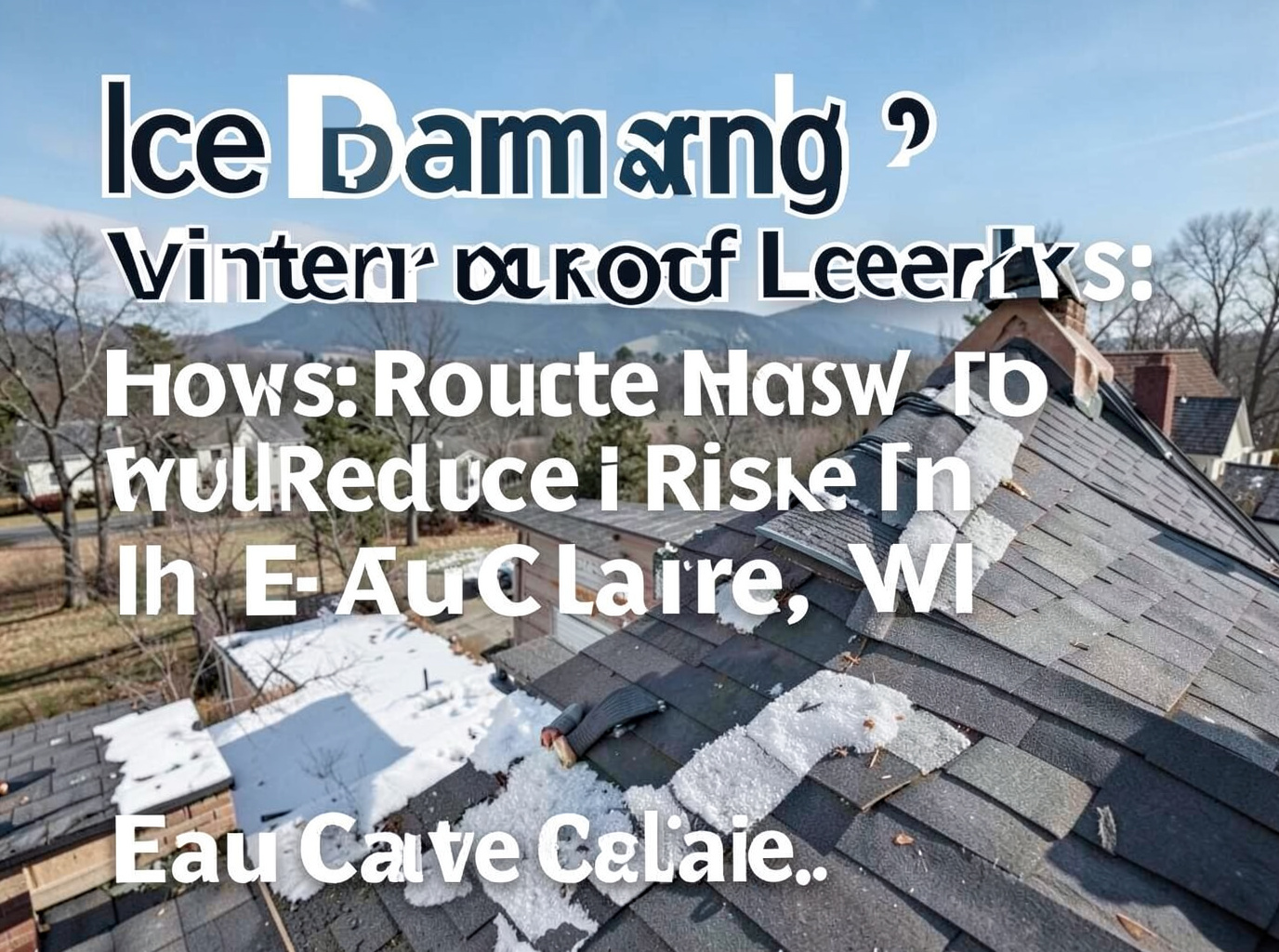
Preventing ice dams and winter roof leaks in Eau Claire starts with sealing attic bypasses and adding insulation to maintain consistent roof deck temperatures during the county's long cold snaps, which stops meltwater from refreezing along eaves and backing up under shingles.
How Ice Dams Develop in Eau Claire Winters
Eau Claire's humid continental climate brings repeated freeze-thaw cycles from November through March that turn roof snow into water which then refreezes at the colder eaves. Older homes in Downtown Eau Claire and along the Chippewa River often have uneven attic insulation and poor ventilation, allowing heat from living spaces to warm the roof deck unevenly. When daytime temperatures climb above freezing while nights drop below, the cycle repeats and creates thick ice ridges that trap water. The same pattern affects two-story houses on the West Side and East Side near the University of Wisconsin-Eau Claire, where mature trees can shade sections of roof and slow snow melt. Homes in nearby Chippewa Falls experience identical conditions because the regional weather patterns do not change over the short distance. These ice dams push water under shingles and into attics, leading to ceiling stains and insulation damage that shows up weeks later when temperatures rise.
Practical Prevention Steps for Local Homes
Start by checking attic insulation depth and adding R-49 or higher material where gaps exist around chimneys, recessed lights, and plumbing stacks. Improve airflow with continuous ridge and soffit vents sized for the roof square footage so the entire deck stays cold. Keep gutters and downspouts clear of leaves and debris before the first snow so meltwater has a clear path away from the foundation. Trim branches that overhang the roof to reduce snow load and allow better airflow. On the East Side and in Putnam Heights, homeowners often add self-adhering ice-and-water shield along the lower four to six feet of the roof deck during any re-roofing project. These steps address the specific heat-loss patterns common in Eau Claire's older housing stock rather than generic national advice.
When Professional Ice Dam Removal Becomes Necessary
If water stains appear on ceilings or ice builds beyond six inches at the eaves, contact a local roofing contractor for ice dam roof repair before interior damage spreads. Crews use steam wands rather than hammers or chemicals to remove ice without harming shingles. In severe cases across West Eau Claire or Third Ward, temporary interior tarps and dehumidifiers protect belongings while the roof is cleared. For ongoing snow and ice issues, schedule snow and ice roof damage repair that includes checking flashing around chimneys and valleys. Prompt response limits the water intrusion that occurs when dams finally release during a warm spell.
Long-Term Upgrades That Reduce Future Risk
Adding powered attic fans or increasing soffit vent area provides consistent cold-roof performance through Eau Claire winters. When replacing an asphalt shingle roof, install ice-and-water membrane at least six feet up from the eaves and around all penetrations. Homes in Altoona and Lake Hallie benefit from the same upgrades because the climate is identical. Readers can review additional guidance in the post on roof ventilation and commercial flat-roof maintenance in Eau Claire, WI for details on airflow calculations. These improvements pay for themselves by extending roof life and avoiding repeated interior repairs.